Latest posts
-
Article 5: Chairs Already Taken: Five Categories Decided Before the Market Saw Them Coming
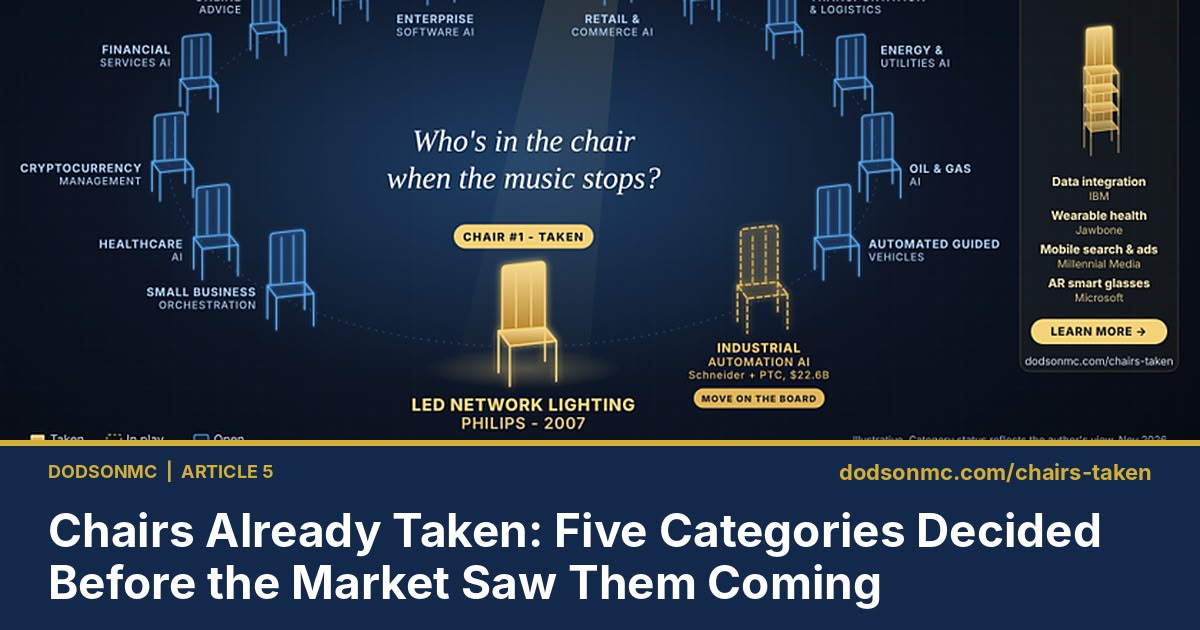
Philips, IBM, Jawbone, Millennial Media and Microsoft each bought a category claimed years early. Five case studies in how category leaders really get decided.
-
Article 4: Did I Meet Another Thomas Edison?
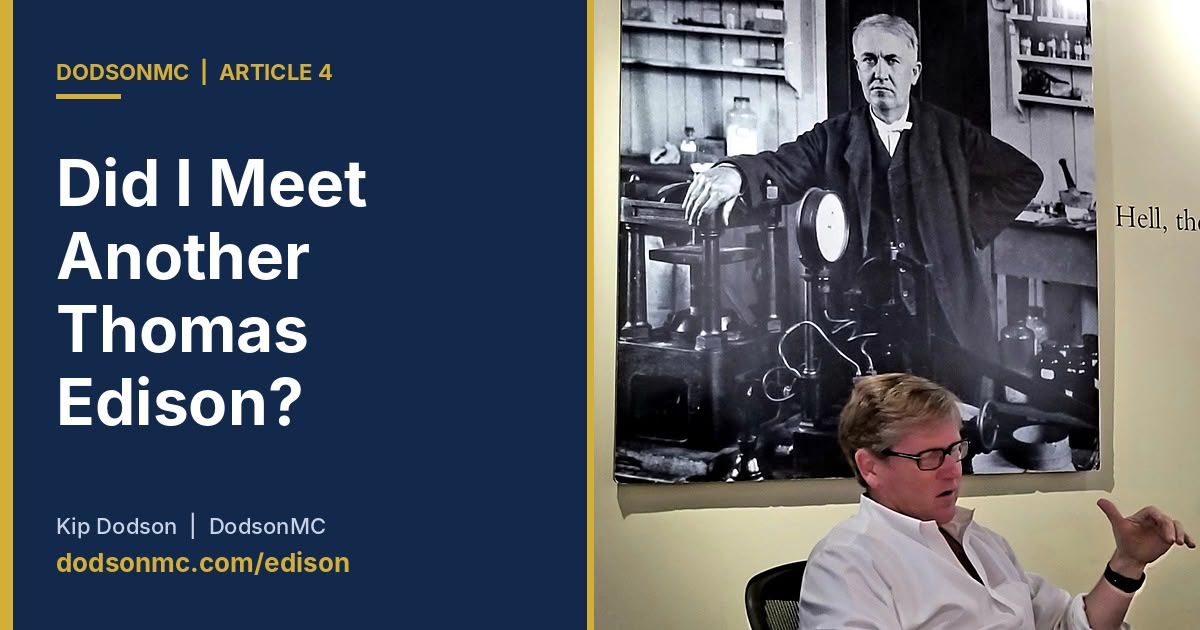
Edison patented the light bulb that worked. Charles Cella helped Color Kinetics do something similar for LED lighting – and Philips paid $791M for the category. Now he’s doing it with AI.
-
Article 3: The Clock Is Ticking on AI Category Leadership – And Waiting Gets EXPENSIVE

AI category leaders are being decided right now. Kip Dodson on the musical chairs of the AI application layer – and why waiting turns strategy into a bill.
-
Article 2: Schneider Just Paid $22.6 Billion for the Architecture. Who Owns the Rights Underneath It?
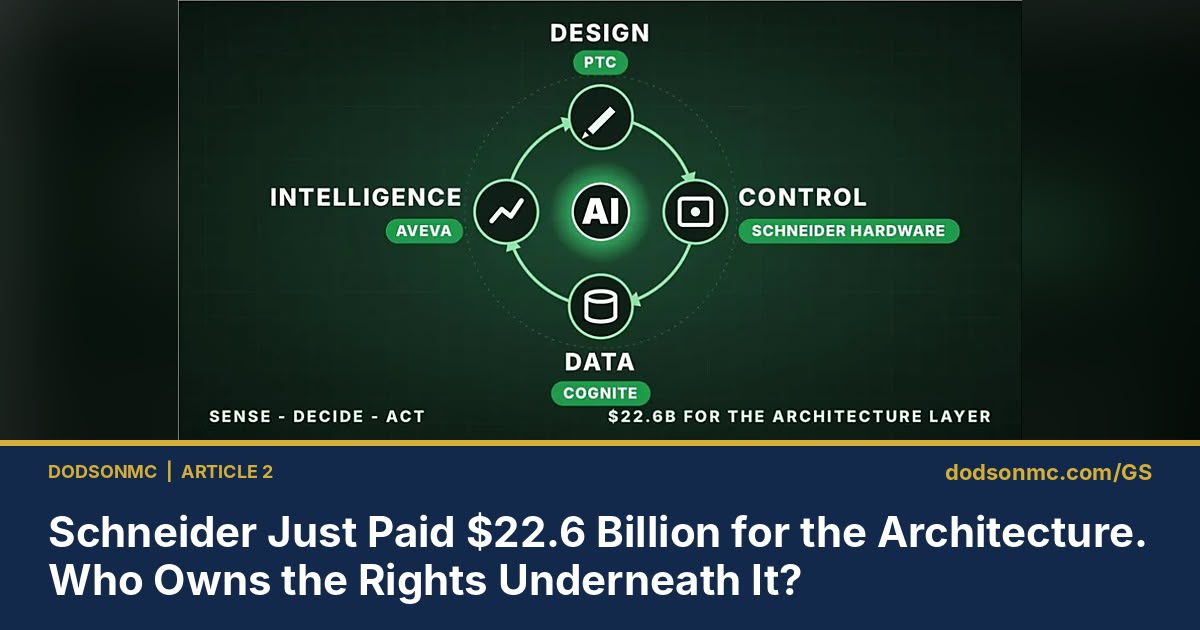
Schneider’s $22.6B PTC acquisition raises a larger question: who owns the intellectual property and AI architecture beneath industrial innovation?
-
Review Filtering Is Banned. Your Salon Software Still Does It.

Google bans review gating, yet at least 5 of 10 salon and spa platforms still ship it. A salon owner since 2004 checks their help docs so you don’t have to.
-
How Do You Price Something Nobody Else Has?

Strong Force doesn’t fit standard valuation frameworks. Richard Spitz explains why a one-of-one patent estate is a strategic risk question, not a revenue model.
-
Your Code Isn’t Your Moat Anymore. Here’s What Is.

AI is reducing the scarcity value of software. Richard Spitz on why competitive advantage is moving from code alone to the architecture that controls AI.
-
Whoever Controls the AI Architecture Wins. Most Businesses Don’t Own Theirs.

Model access alone won’t produce durable returns. Richard Spitz on why control of the AI architecture – and the intelligence it creates – is the central issue.
-
AI Will Commoditize Everything You’ve Built. Except This.
AI lets competitors rebuild your workflows in a fraction of the time. Richard Spitz of Strong Force on what still protects the edge you build on top of AI.
-
Article 1: I Went Looking for a Way to Protect My IP in the Age of AI. I Didn’t Expect to Find the Alpha Asset in the Room.
Kip Dodson explores how businesses can protect their intellectual property as AI changes software, workflows, and the value of enterprise architecture.